
Opening the Case: Why Access to Instruments Changes Everything
No instrument? No problem. See how access removes barriers and unlocks potential.
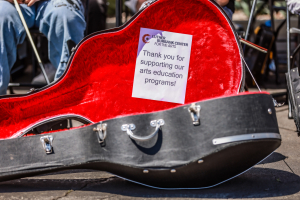
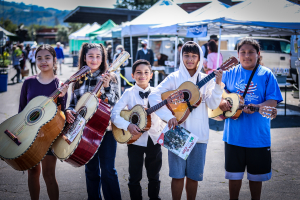
On May 9, come join students who participated in LBC’s free instrument lending library program, Music for Schools, this year for a free community performance during the Saturday Farmers Market to celebrate their musical achievements.
Music Appreciation Day, which runs from 9:00 am to noon, is a great way to get some fresh air, listen to lively music, and witness the remarkable transformation that takes place when young people participate in musical instruction because they had access to an instrument that otherwise would have been out of reach for their family’s budget.
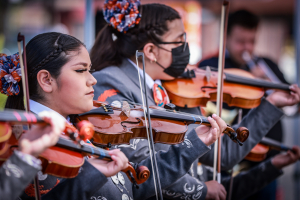
And while you’re marveling at the talent, discipline, and self-confidence that is gained with music instruction, you’ll know what the students may not discover until later in their lives: that access to an instrument is more than a risk-free way to try out a cool guitar or violin. It is access to opportunity.
That idea has deep roots at LBC. The Center’s free musical instrument lending library has been growing since July 2000, when it began as part of another nonprofit, the Burbank Music Education Council (BMEC), founded by Henry Trione, one of Sonoma County’s great benefactors. In July 2003, with their missions and visions aligned, Music for Schools merged into LBC’s Education and Community Engagement program. Since then, LBC has remained the only community organization in the North Bay offering a free instrument lending library, quietly but powerfully expanding access for thousands of students along the way.
Providing free access to musical instruments removes financial and systemic barriers, expanding who gets to participate in school music programs. Access to instruments also improves academic and life outcomes, builds confidence and belonging, and advances equity across communities.
“The biggest barrier to music education for young people isn’t interest,” said Tracy Sawyer, LBC’s Community Partnerships Supervisor. “It is access. Instruments can be expensive, and without one, participation in school music programs often isn’t an option.”
“Instrument access is an equity strategy,” said Ashleigh Worley, Director of Education and Community Engagement. “It ensures music education is available to all communities, not just those with resources. And when we remove the cost barrier, we don’t just increase participation, we unlock potential that would otherwise go undiscovered.”
Thankfully, much of the instrument maintenance and acquisitions for LBC’s Music for Schools program are sustained through donor support, including gifts from Victor and Karen Trione and the Max and Victoria Dreyfus Foundation.
Once students have access, the impact begins to build. With an instrument in hand, students learn notes and rhythms at the same time they are developing discipline, confidence, and resilience. They discover what it means to practice toward a goal, to improve over time, and to share their progress with others.”
“Just as important,” Tracy said, “music creates connection. Whether in a classroom, an ensemble, or on stage, students experience a sense of belonging that can be transformative. They become part of something larger than themselves, a community that listens, collaborates, and creates together. In this way, access to instruments doesn’t just support music education; it helps build confidence, identity, and inclusion across our community.
Ultimately, the benefits extend far beyond a single performance or school year. Research consistently shows that students engaged in music are more likely to stay connected to school and succeed academically. But even beyond measurable outcomes, early access to music can shape lifelong paths, opening doors to future opportunities, creative pursuits, and a lasting appreciation for the arts.
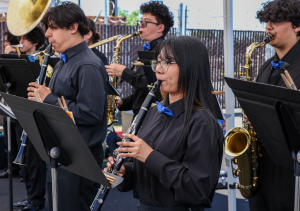
Music Appreciation Day – A Milestone
The fifth annual Music Appreciation Day is packed with musical performances by students in LBCs Mariachi Toritos and Mariachi Chilaquiles afterschool programs as well as students in the guitar, band, stings, and the children’s chorus programs at John B. Riebli Elementary, San Miguel Elementary, Mark West Elementary, and Mark West Charter School.
“Performances like Music Appreciation Day become milestones, where growth is celebrated and students begin to see themselves not just as learners, but as musicians,” said Tracy, who helped create Music for Schools, first at BMEC and then with the LBC. Tracy has worked with community partners for the last 26 years to take the library inventory from zero instruments to 1,145. She oversees maintenance and repair to ensure all students are playing on a quality instrument, and she works with schools to meet the needs of their music programs. This year, 81% of the instruments found their way into students’ hands.
All of this begins with Henry Trione’s simple but powerful idea: remove the barrier, and possibility takes its place. At LBC, providing free access to musical instruments ensures that more students have the chance to discover their potential and share it with the world.
Music Appreciation Day
Free and open to the public
May 9, 9:00 am to noon
Santa Rosa Certified Organic Farmers Market
LBC North Parking Lot


